Unleashing the Power of NVIDIA’s Evo 2 Biological Foundation Model: A Game-Changer for India’s AI and Biological Research Landscape
- by ai
- in Breakthroughs, Featured
- on March 25, 2025
How Evo 2 and India’s AI Ambitions Can Transform Healthcare, Agriculture, and Biotechnology for a Sustainable Future
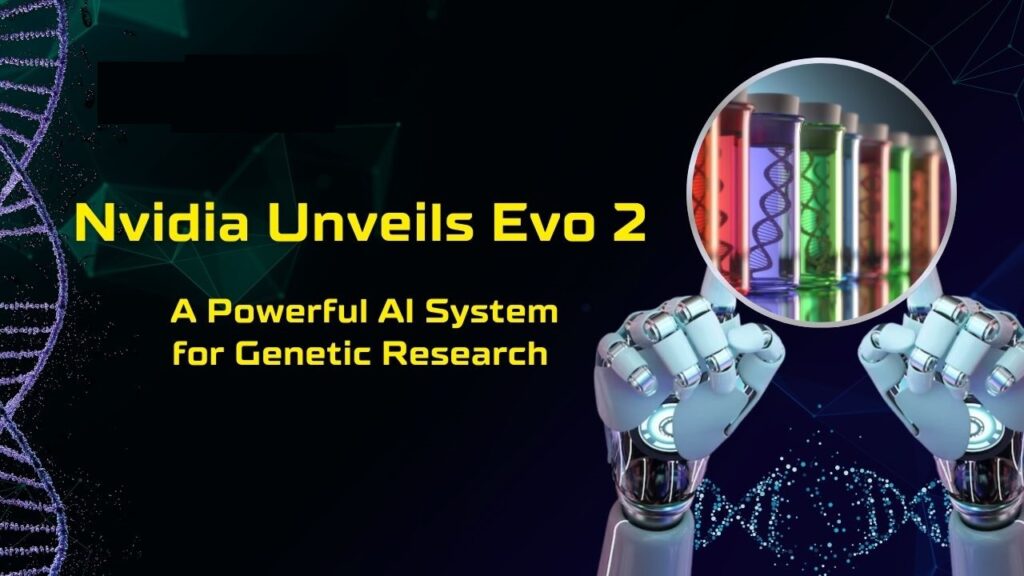
In an era where artificial intelligence (AI) is transforming industries worldwide, NVIDIA’s Evo 2 stands out as a monumental leap forward in biological foundation models. Developed in collaboration with the Arc Institute and esteemed researchers from Stanford University, UC Berkeley, and UC San Francisco, Evo 2 is not just another AI model—it’s a revolutionary tool designed to decode and generate DNA sequences with unprecedented precision. With its 40 billion parameters and ability to process genomic data across all domains of life, Evo 2 is poised to redefine biological research, healthcare, agriculture, and more. For a country like India, with its rich biodiversity, burgeoning tech ecosystem, and pressing societal challenges, Evo 2 offers transformative potential. This article explores what Evo 2 is, its benefits for India, and how similar initiatives could propel the nation to the forefront of AI-driven biological innovation.
What is NVIDIA’s Evo 2?
Evo 2 is the largest AI model for biology to date, boasting a staggering 40 billion parameters. Unlike traditional AI models that focus on language or images, Evo 2 is engineered to interpret and create DNA sequences—from single nucleotides to entire genomes. Built on NVIDIA’s cutting-edge StripedHyena 2 architecture and trained on over 9 trillion nucleotides from 128,000 species, it represents a quantum leap from its predecessor, Evo 1, which was limited to prokaryotic genomes. Evo 2’s ability to handle a context length of up to 1 million tokens allows it to analyze and generate complex genomic structures, such as yeast chromosomes or small bacterial genomes, with remarkable accuracy.
What sets Evo 2 apart is its versatility. It can predict how mutations affect protein function, design synthetic DNA sequences, and even engineer intricate biological systems like CRISPR-Cas complexes. Fully open-source and accessible via NVIDIA’s BioNeMo platform, Evo 2 empowers researchers globally with tools like Evo Designer—a user-friendly interface for DNA sequence generation and analysis. This democratization of advanced technology aligns perfectly with India’s ethos of inclusive innovation, making it a tool of immense promise for the nation.
The Benefits of Evo 2 for India
India stands at a unique intersection of challenges and opportunities. With a population exceeding 1.4 billion, a thriving biotech sector, and a growing AI ecosystem, the country is well-positioned to harness Evo 2’s capabilities. Here’s how this biological foundation model could benefit India across multiple domains:
1. Revolutionizing Healthcare
India faces significant healthcare challenges, including a high burden of genetic diseases, cancer, and infectious diseases like tuberculosis. Evo 2’s ability to predict the functional impact of mutations—demonstrated by its 90% accuracy in assessing BRCA1 gene variants linked to breast cancer—could accelerate personalized medicine. Indian researchers could use Evo 2 to identify disease-causing mutations specific to the country’s diverse gene pool, enabling earlier diagnoses and tailored treatments.
Moreover, Evo 2’s capacity to design novel molecules could fast-track drug discovery. For instance, India’s pharmaceutical industry, often dubbed the “pharmacy of the world,” could leverage Evo 2 to develop new antibiotics to combat antimicrobial resistance—a pressing global and local issue. By reducing the time and cost of drug development, Evo 2 could help India maintain its edge in affordable healthcare solutions.
2. Boosting Agricultural Innovation
Agriculture employs nearly half of India’s workforce, yet farmers grapple with climate change, pests, and declining yields. Evo 2’s ability to engineer DNA sequences offers a lifeline. Scientists could use it to design crops with enhanced resilience to drought, heat, or disease—critical traits for a country vulnerable to erratic monsoons. Imagine rice varieties engineered for higher yields or wheat strains resistant to blight, all tailored to India’s agro-climatic zones.
Additionally, Evo 2 could support synthetic biology efforts to create biofertilizers or biopesticides, reducing reliance on chemical inputs. This aligns with India’s push for sustainable agriculture under initiatives like the National Mission for Sustainable Agriculture, enhancing food security while preserving the environment.
3. Advancing Industrial Biotechnology
India’s industrial sector, from textiles to biofuels, could tap into Evo 2 to engineer enzymes and microorganisms for greener processes. For example, designing bacteria to produce biofuels from agricultural waste could address both energy needs and waste management—a dual challenge in India. Similarly, enzyme optimization for textile processing could reduce water and energy consumption, supporting India’s sustainability goals.
4. Empowering Research and Education
India’s academic institutions, such as the Indian Institutes of Technology (IITs) and the Council of Scientific and Industrial Research (CSIR), could integrate Evo 2 into their curricula and research programs. Its open-source nature levels the playing field, allowing students and scientists in resource-limited settings to explore cutting-edge genomics. This could foster a new generation of Indian bioinformaticians and synthetic biologists, strengthening the country’s position in global science.
5. Bridging the Digital-Biological Divide
The IndiaAI Mission, launched in 2024 with a $1.25 billion investment, aims to build AI infrastructure and talent. Evo 2 aligns seamlessly with this vision, merging AI with biology to address India-specific challenges. By training Evo 2 on Indian genomic datasets—such as those from the Genome India Project, which seeks to sequence 10,000 Indian genomes—researchers could unlock insights into the country’s unique genetic diversity, driving innovations rooted in local contexts.
Similar Projects in India: The Road Ahead
While Evo 2 is a global marvel, India has the talent, data, and ambition to develop similar biological foundation models. Here are some possibilities and existing efforts that could pave the way:
1. Bharat BioAI: A Homegrown Model
India could launch “Bharat BioAI,” a biological AI model tailored to its biodiversity and population. Leveraging the IndiaAI Mission’s 18,693 GPUs and partnerships with institutions like IIT Bombay and the Indian Institute of Science (IISc), this model could focus on Indic species and diseases. For instance, training it on genomic data from India’s 4,635 ethnolinguistic groups could reveal genetic markers for diseases like diabetes, prevalent among South Asians.
The government’s 40% subsidy for researchers and 67 proposals under the IndiaAI Mission—including 20 large language models (LLMs)—signal readiness for such an endeavor. By integrating biological data with AI, Bharat BioAI could mirror Evo 2’s success while addressing India-specific needs.
2. Synergy with Bharat GPT
Reliance Jio and IIT Bombay’s Bharat GPT project, unveiled in 2024, aims to embed AI into India’s technological fabric. Expanding its scope to include biological modeling could create a hybrid platform, combining linguistic and genomic AI. This synergy could power applications like AI-driven diagnostics in regional languages or farmer-friendly crop design tools, bridging India’s digital and rural divides.
3. Collaborative Ecosystems
India’s biotech hubs, such as Bengaluru and Hyderabad, could collaborate with NVIDIA’s BioNeMo platform to localize Evo 2. Partnerships with global players like NVIDIA—already working with Reliance on AI initiatives—could accelerate technology transfer. Meanwhile, startups like Strand Life Sciences or MedGenome could adapt Evo 2 for Indian genomic datasets, fostering a vibrant innovation ecosystem.
4. Leveraging Open-Source Momentum
Evo 2’s open-source framework sets a precedent India could follow. By making Bharat BioAI open-source, India could attract global collaborators while empowering local researchers. This mirrors efforts like the Open Source Drug Discovery (OSDD) initiative, which crowdsourced solutions for tuberculosis, proving India’s knack for inclusive science.
Challenges and Opportunities
Adopting Evo 2 or building a similar model isn’t without hurdles. India must address data privacy concerns, especially with genomic information, under laws like the Digital Personal Data Protection Act (2023). Infrastructure gaps, such as limited high-performance computing beyond urban centers, also pose challenges. However, the IndiaAI Mission’s focus on GPU clusters and skill development offers a roadmap to overcome these barriers.
The opportunities, though, are boundless. By integrating Evo 2 into its biotech and AI strategies, India could lead in generative genomics, much like it dominates in IT services. This could attract foreign investment, boost exports of bioengineered products, and create millions of jobs—mirroring the IT boom of the 1990s.
Conclusion
NVIDIA’s Evo 2 is more than a technological marvel—it’s a catalyst for India to merge its AI ambitions with its biological potential. From revolutionizing healthcare and agriculture to inspiring homegrown models like Bharat BioAI, Evo 2 offers a blueprint for innovation. As India strides toward its 2047 development goals, embracing such tools could position it as a global leader in AI-driven biology. The question isn’t whether India can adopt Evo 2 or build something similar—it’s how swiftly it can act to unlock this future. For researchers, policymakers, and dreamers alike, the time to harness this power is now.
---
References:
- NVIDIA BioNeMo Platform Documentation
- IndiaAI Mission Reports, Government of India (2024)
- Genome India Project Updates
- Arc Institute and NVIDIA Collaboration Announcements (2025)
Unlocking the Future Exploring Biomolecular AI with NVIDIA Evo 2
Tags: agricultural technology, Bharat BioAI, biological foundation model, biotechnology, Evo 2, generative genomics, genomic research, healthcare innovation, India AI, IndiaAI Mission, Nvidia, Open Source AI, personalized medicine, sustainable agriculture, synthetic biology